LIABILITY COVERAGE
Liability coverage pays for property damage and injuries to others if you're at fault in an accident, plus it helps with legal defense costs for claims.
WHY PAY MORE?
Car

Motorcycle

Commercial

Roadside Assistance

Other








With a car insurance policy, you can easily safeguard your vehicle from accidents, theft, vandalism, natural disasters, and other unexpected events while on the road.
Protect your beloved two-wheeler with motorcycle insurance as you soar through the open roads. Stay secure and insured against unforeseen damage expenses that may come your way.
Classic car insurance offers coverage based on your car’s agreed-upon value, helping preserve its worth regardless of market changes, depreciation, or fluctuations.
Specialized vehicles like RVs need specialized coverage to fulfill their needs. We help you find a comprehensive policy that protects your RV from accidents, fires, and more.
You can secure your boat with our boat insurance solutions, protecting against damage, theft, equipment loss, and more. Sail through the lakes in your city without worry!
An off-road vehicle insurance plan covers damages from hazards faced in rugged terrains, ensuring complete protection, peace of mind, and confidence on every ride.
Van insurance covers various types of vans for transport, deliveries, personal use, etc. Get specialized coverage to ensure your business continues to function despite mishaps.
Trucks serve various commercial purposes, including delivery, towing, and hauling. Truck insurance encompasses multiple makes and models, providing a stable insurance plan.


Competitive Rates
Industry Expertise
With or Without a License
With Good Credit, Bad Credit, or No Credit
Online/
Phone/
In-Person
Services
Multiple Convenient Locations Near You

Liability coverage pays for property damage and injuries to others if you're at fault in an accident, plus it helps with legal defense costs for claims.

Whether at fault or not, collision coverage helps you pay for your vehicle's repair and replacement expenses after a road accident or collision.

This coverage helps protect against various non-collision incidents, such as hailstorms, theft, fire, vandalism, running into wild animals, and more.
PIP coverage includes medical injury costs, lost income, funeral expenses, and other costs that may result from an accident, regardless of your fault.

UM/UIM coverage helps pay for your vehicle damages and injuries if an uninsured or underinsured driver hits you, so you don’t have to cover the expenses.

MedPay coverage offers medical care for you and your passengers after an accident, regardless of who is at fault, ensuring you receive the care you need.
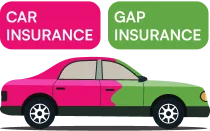
Gap insurance is an optional additional coverage that helps cover the difference between the amount you owe on your car loan and its actual cash value.

Roadside assistance helps drivers access emergency services when they encounter unexpected breakdowns, such as tire changes, towing, or jumpstarts.
This type of coverage helps you pay for the rental of a temporary replacement vehicle if your insured car is out of service because of a covered event.
It is an insurance option that provides you with a brand-new car of the same make and model if your new car is totaled in an accident.
Commercial auto insurance financially covers vehicles used for business operations, such as delivery, hauling, and towing, unlike personal auto insurance.
Mexican car insurance covers people traveling to and planning to drive in Mexico, providing essential protection against unexpected road perils abroad.
SR-22 insurance proves that a driver carries sufficient insurance based on the state minimum requirements, ensuring compliance with the law on their part.
If you are ever caught driving under the influence, you must carry this coverage to meet legal requirements and cover damages, as most states mandate.
A vehicle maintenance plan covers routine upkeep and repairs for a specific period, keeping your car in top condition and maintaining its resale value.

Visit our website to learn about our wide range of insurance solutions and take a step forward in finding the most suitable insurance plan for your car.

You can easily contact our experienced insurance agents for personalized assistance, expert advice, and the right coverage tailored to your needs.

Compare and choose from multiple insurance quotes provided by our agents to find the best coverage that fits your needs and budget.
A car insurance policy is a legal contract between the policyholder (the person who owns and primarily drives the car) and an insurance company.
This contract provides financial protection against potential liabilities, accidents, and other vehicle-related risks. In exchange for this protection,
the policyholder must pay a specified yearly or monthly premium. While liability coverage is included in every car insurance policy, other types of coverage,
such as collision, comprehensive, and uninsured/underinsured motorist (UM/UIM) coverage, are optional.
A reliable insurance policy can protect against many hazards, depending on your coverage choices, such as road accidents, theft, vandalism, and natural
disasters. However, the insurance company will not be responsible for any events or financial losses not covered in your contract. Therefore, you must review
your policy thoroughly before finalizing it and look for any potential exclusions. Evaluate your needs to decide if you require additional coverage.
Car insurance rates fluctuate based on various factors, helping insurance providers determine the risk levels associated with each driver. Understanding these factors can help policyholders estimate their potential premiums and make informed decisions for their vehicles. For example, a policyholder living in a high-risk area will be charged higher as there are more theft occurrences. Here are some of the most common factors insurers may consider when deciding on your insurance premium:

Driving History

Age and Gender

Location

Vehicle Type and Model

Credit Score

Coverage Level

Deductible Amount

Claims History

Annual Mileage

Insurance Provider

Marital Status

Type of Driving

Discounts and Bundles

Safety Features in the Vehicle

State Laws and Regulations
Auto insurance is crucial for all types of vehicle owners as it helps provide financial protection and meet legal requirements. It helps them comply with state laws and regulations. Whether for legal, financial, or practical reasons, insurance is a mandatory safety for both you and your vehicle. Adding relevant coverages to your policy secures you against hefty financial losses from accidents, theft, and other hazards. Here is a list of individuals who commonly require a dependable insurance plan:

Drivers who lease or finance their vehicles.
Business owners with vehicles for company use.
People operating a vehicle on public roads.
Drivers needing minimum liability coverage.
Individuals protecting themselves from accident-related costs.
Individuals looking to cover accident-related expenses.
Teenagers with a learner’s permit who will be driving.
Vehicle owners responsible for insurance, even if not driving.
Motorists avoiding penalties for driving uninsured.
Drivers engaging in high-risk activities needing extra coverage.

When you purchase an auto insurance policy, you must regularly pay the insurer a premium in exchange for coverage based on your chosen options and limits. If you are ever in an accident or your car is damaged, you must file a claim with your insurance provider. They will evaluate the damage, and if the claim is approved, you will be reimbursed for vehicle damage and medical and legal expenses.
However, one should also understand that different coverages offer different levels of protection, such as liability coverage, which covers the damages and injuries you have caused to the other party. On the other hand, collision coverage pays for the repair costs of your vehicle in an accident, regardless of who is at fault. This helps secure against damages arising from your own and others' actions.
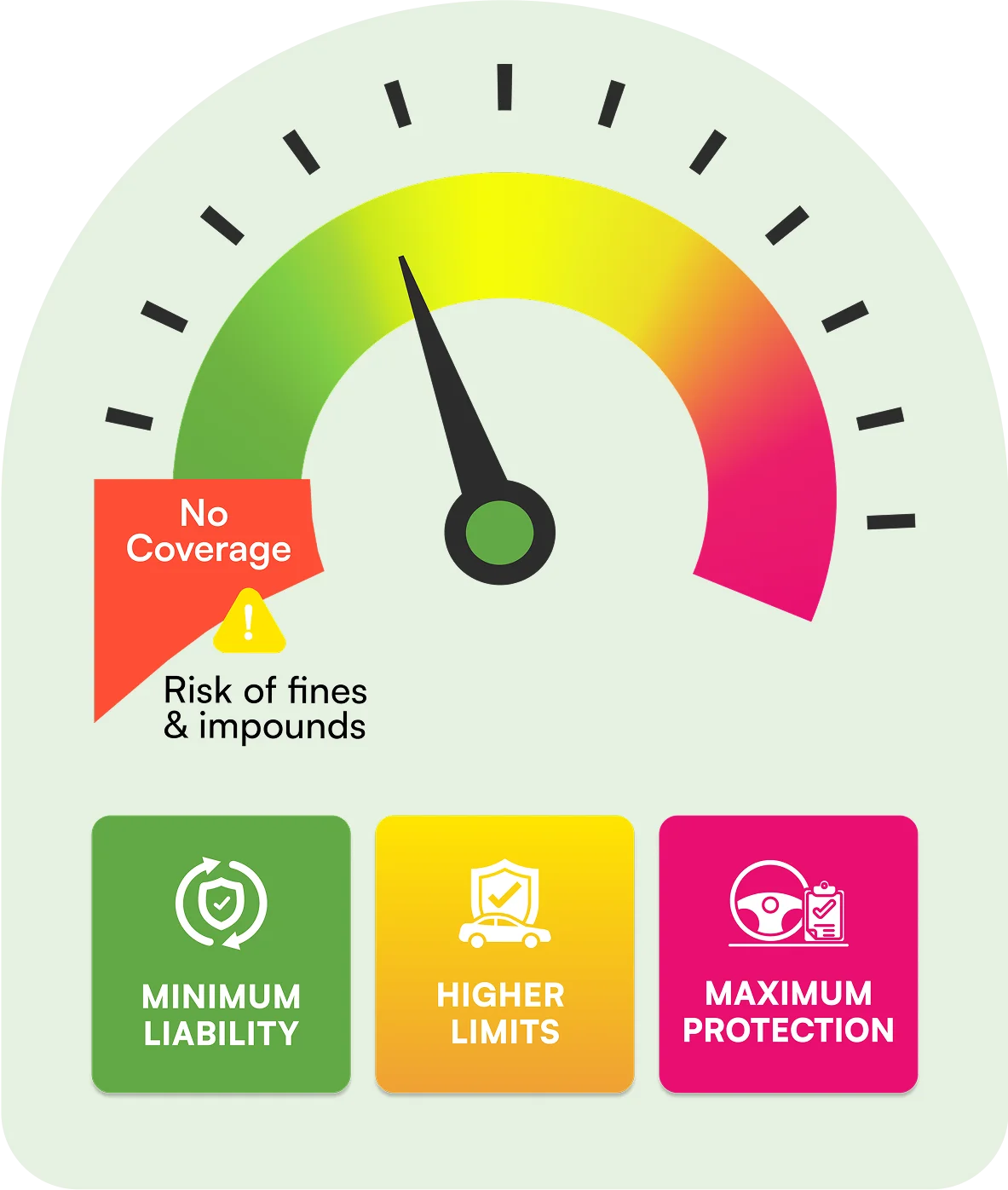
There is no straight answer to this question, as coverage needs vary from one policyholder to another. Beyond state-required minimum liability insurance
and your lender's requirements, you need adequate coverage to protect your car against unforeseen damages and cover yourself for injuries and potential
lawsuits, since minimum liability only covers the damages and injuries of the other party. Each policyholder is exposed to risks and hazards that should
also be considered.
The National Association of Insurance Commission recommends the following when purchasing a car insurance policy:

Compliance with state laws.
Satisfying lender requirements (if you have a loan or lease).
Protecting your assets against lawsuits in case of a car accident.
Auto insurance is a necessary expense that you cannot avoid. It helps secure your financial stability against various unforeseen situations. Nearly all insurance providers offer their customers a wide range of insurance options. You should always check with your insurance broker to see if there are any available discounts. You can also directly communicate with your car insurance provider for help finding suitable offers and incentives. Here are some typical discounts you can look for:

Safe Driver Discount

Good Student Discount

Multi-Policy Discount

Multi-Vehicle Discount

Low Mileage Discount

Defensive Driving Course Discount

Anti-Theft Device Discount

Pay-in-Full Discount

Paperless Billing Discount

Automatic Payment Discount

Accident-Free Discount

Affinity or Membership Discount

New Car Discount

Military Discount

Homeowner Discount

Loyalty Discount

Green Vehicle Discount

Usage-Based Insurance Discount

Senior or Mature Driver Discount

Occupation-Based Discount
According to Bankrate, the national average for full-coverage car insurance is $2,543 yearly or $212 monthly. If you choose the minimum coverage, you must pay an average of $740 a year or $63 per month. However, you must realize that these are not fixed rates. Every policyholder has different insurance needs and wants; some may require a type of coverage while others may not, leading to different insurance rates.
For example, an expensive model requires extensive coverage, while a second-hand one may not need comprehensive protection. A reliable insurance broker can assist you in examining your insurance requirements and preferences. They help you secure relevant car insurance discounts and incentives if your premiums are out of your budget.

Receiving a car insurance quote requires you to fulfill certain formalities. Insurance companies evaluate many factors before calculating a premium that reflects your coverage requirements and levels. You must share all complete and accurate details when applying for an insurance quote to avoid disruptions while filing a claim in the future. Incorrect information can lead to delays and even denials in the claims handling process. Here are some essential requirements for a precise auto insurance quote:


Take the first step to responsible car ownership with CINCO Auto Insurance. We make finding the perfect, budget-friendly coverage very easy.
Once you have completed and submitted this simple application, one of our insurance agents will contact you within a few hours. Since we have a wide range of insurance carriers on board, you won’t have trouble finding the right one. Get your free insurance quote today, or visit your nearest CINCO location!
Car
Motorcycle
Commercial
Roadside Assistance
Other
Understanding vehicle accident statistics and insights is crucial for drivers looking to improve road safety and make well-informed decisions. The following statistics reveal patterns that may lead to accidents, highlight high-risk behaviors, showcase numbers of registered cars, etc. By analyzing these figures, drivers can better understand common accident causes and identify preventative measures. The following numbers are based on recent data from the years 2021 to 2024, ensuring relevance:
01
Every day in the U.S., approximately 37 people lose their lives in car crashes involving drunk driving. (Forbes)
02
At least 50% of annual road deaths are caused by pedestrians being hit by vehicles, according to Supt. Minnaar. (HuffPost)
03
According to survey data, 91.55% of U.S. households had access to at least one vehicle in 2020, up from 90.82% in 2015. (ValuePenguin)
04
The Ford F-150 has consistently ranked as the best-selling vehicle in America for years, reflecting its popularity for reliability, durability, and performance. (Armormax)
05
Car accidents are the leading cause of fatality among children under the age of 15 in the US. (The New York Times)
06
In 2022, crash-related deaths in the U.S. led to over $470 billion in total costs, including medical expenses and the estimated value of lives lost. (Centers for Disease Control and Prevention)
07
Travel by car on roads and streets decreased by 1.7% compared with June 2021, translating into a 4.8 billion vehicle miles reduction in June 2022. (Federal Highway Administration)
08
In 2024, 91% of all American adults had a driver’s license, up from 89% in 2020 and 90% in 2021-2022. (Hedges&Company)
09
Human error is attributed to 94% of all car accidents, making it the leading cause of road collisions. (National Highway Traffic Safety Administration)
10
Younger groups are more likely to engage in risky driving practices, as evidenced by the startling 24% increase from 2022. (LexisNexis Risk Solutions)

Note: These statistics were accurate at the time of publication and may change over time. Please refer to official sources for the most current data.
When purchasing car insurance, you must familiarize yourself with specific terms, which may help you make an informed decision. These often seem difficult to comprehend, but they are easy to understand. Here are some common auto insurance terminologies:
Coverage — Coverage refers to the protection an insurance provider offers, securing your vehicle against specific risks, such as liability and collision coverage.
Deductible — A deductible is the amount a policyholder agrees to pay out of pocket before insurance money flows in case they ever decide to file an insurance claim.
Premium — Your insurer sets a premium, which you must pay on a monthly, quarterly, or yearly basis, based on your plan, to ensure the continuity of your coverage.
Policy Limit — Policy limits represent the maximum amount an insurance provider will cover for an insured loss under a specific coverage, such as liability coverage.
Claim — A claim is a formal request a policyholder makes to the insurance company for payment based on their policy's terms in case of unforeseen damages.
Exclusion — An exclusion is a specific event, item, or person that is not covered under your insurance policy in case of an unforeseen event, such as an accident.
Actual Cash Value (ACV) — Actual Cash Value (ACV) is the amount an insurer is willing to pay to replace a vehicle or item, considering depreciation and market fluctuations.
Declarations Page — The declarations page is a summary document the insurer provides that outlines the policy's key information, such as your name and vehicle information.
Endorsement — An endorsement, also known as a rider, is an add-on to an existing insurance plan that alters the terms or coverage, providing extra protection.
Grace Period — The grace period is a designated time frame after the premium due date, during which the policyholder can pay late without losing their insurance coverage.
With over 7,000+ 5 star Google reviews and counting!
Vanessa Echeverry
I love Karina’s customer service. She is amazing—super friendly and super quick at getting you your insurance and on your way! She makes the entire process easy and is very helpful. Thank you, Karina!

Google Review
Walter P
I referred a few people here because of the exceptional job my rep provided. I call her my rep because she’s the only one I’ll go to from now on, and she’s the one I’ll refer my family to. I appreciate Paula for going above and beyond with me and the referrals I provided. All of this is due to the focus she placed on my situation. I will continue referring people to Paula for insurance solutions. Thank you again!
Google Review
Joyce Evans
Thank you, Javier, for the professional customer service. I am a senior citizen and don’t always get things right the first time. Thank you for your patience. I’m glad to have CINCO Insurance close to me in Garland on Northwest Highway.
Google Review
Doris Edmond
I spoke with Veronica, an agent with CINCO. She was the BEST! I was so stressed because I had been looking for coverage. Veronica took away all my stress. She worked with me tirelessly until she found auto coverage I could afford. I highly recommend her. She's professional, kind, courteous, and—most of all—patient. The definition of good customer service is VERONICA—my agent for life!
Google Review
Alva Ayuso
Valeria was very patient and courteous with us, answered all our questions, and helped us with all the paperwork! We will definitely recommend CINCO Auto Insurance to all our friends. Very satisfied!
Google Review
Rosalinda Alvarez
THANK YOU SO MUCH, AIME!! She offers outstanding customer service, going above and beyond to ensure a smooth and satisfying experience. Her professionalism, responsiveness, and attention to detail make every interaction pleasant and efficient. I highly recommend Aime 100% for her dedication to excellence and commitment to customer satisfaction! My family and I have found a great insurance company—all thanks to Aime.
Google Review
Alexus Monique
I’m currently looking for car insurance, and I’m so glad I decided to try this place out. The insurance agent Paula was very knowledgeable and sweet. She answered all my questions and made sure I didn’t leave with any doubts! I’m highly satisfied with my experience here and will be recommending this place. 😊
Google Review
Zouquayla Butler
I recently joined CINCO, and getting started was easy breezy. Javier is a 10/10—highly recommend! Great customer service, like we were old friends catching up while taking care of business. Thanks again, Javier. Awesome!
Google Review
Jose Santos
The service is excellent, and they help you with everything. You just have to be available, and they’ll do the work for you. I loved the work my agent Yolanda did. I recommend her—just ask for her!
Google Review
Rebecca Esquivel
Javier was awesome to talk to. He explained everything in detail and even repeated himself multiple times. Very, very patient with me—quick and ready to go! I was struggling to get a good quote, but he got me in and out. Thank you, Javier. 10/10 recommend!
Google Review